


















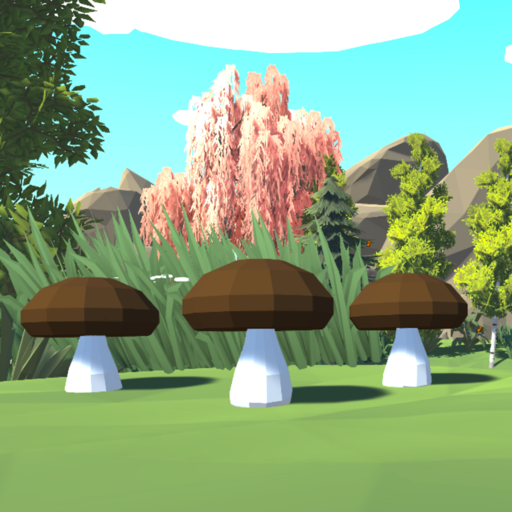








Somewhere inside a quiet forest, a tiny mushroom is hiding beneath a patch of grass. Another rests beside a moss-covered rock, almost invisible against the surrounding vegetation. A third is tucked into the shadow of a tree, waiting for someone patient enough to notice it. There are no enemies chasing you, no countdown demanding your attention, and no complicated missions standing between you and the next discovery. There is only nature, a peaceful landscape, and the simple challenge of finding what others might overlook.
That is the charm of Hidden Mushrooms, a relaxing hidden object game that transforms ordinary forest exploration into a surprisingly engaging adventure. Instead of relying on action, competition, or elaborate storylines, the game invites players to slow down, observe their surroundings, and search for mushrooms carefully concealed throughout beautiful natural environments.
At first, the objective seems almost too simple. Find mushrooms, collect them, and continue exploring. But after spending a few minutes scanning the forest floor, examining unusual shapes, and discovering a mushroom hidden in plain sight, it becomes clear why this type of gameplay can be so satisfying. Every discovery feels like a small personal achievement, and every new environment introduces another opportunity to test your attention to detail.
What Is Hidden Mushrooms?
Hidden Mushrooms is a nature-themed hidden object and exploration game where players search for mushrooms concealed within detailed outdoor environments. The game focuses on observation, patience, and discovery rather than combat or fast-paced challenges.
Players explore forests, meadows, swamps, and other natural landscapes while examining the scenery for mushrooms that blend into their surroundings. Some are relatively easy to identify, while others are partially obscured by plants, rocks, shadows, or environmental details.
The main objective is to locate and collect mushrooms scattered throughout each area. As players make progress, additional environments become available, introducing new scenery and more opportunities for exploration.
What makes Hidden Mushrooms different from many traditional puzzle games is its relaxed approach. Instead of overwhelming players with complicated rules, the game builds its challenge around a familiar activity: looking carefully at the world around you.
The concept is accessible to beginners, but finding every hidden mushroom can require considerable patience and concentration.
How to Play Hidden Mushrooms
Getting started with Hidden Mushrooms is straightforward. Once the game begins, you are presented with a natural environment containing mushrooms hidden among the scenery.
Your task is to explore the area, identify mushrooms, and collect them using the available interaction controls. Depending on the version, you may be able to move the camera, adjust your viewing position, or zoom in to inspect smaller details.
Begin by observing the environment as a whole. Look for recognizable mushroom shapes, unusual colors, or objects that appear slightly different from the surrounding vegetation.
When you identify a mushroom, select it to register the discovery. Continue searching until you have collected enough mushrooms to meet the area's progression requirements.
As you unlock additional locations, the environments introduce different visual challenges. Mushrooms may become more difficult to distinguish from their surroundings, encouraging players to develop a more systematic searching technique.
The controls are simple, but careful observation makes the difference between quickly completing an area and spending several minutes searching for one final mushroom.
Hidden Object Gameplay That Rewards Patience
The central mechanic in Hidden Mushrooms is visual searching. Rather than solving mathematical puzzles or memorizing complicated instructions, players must examine detailed environments and identify specific objects.
This creates a challenge based on perception.
A mushroom might be visible near the base of a tree, but its color could closely resemble the surrounding leaves. Another might be partially concealed behind a rock, revealing only a small section of its cap.
The difficulty comes from recognizing familiar shapes within visually complex scenery.
Unlike action games where success often depends on quick reactions, Hidden Mushrooms encourages players to take their time. Moving too quickly through an environment can cause you to overlook objects that would be easy to identify with a more careful approach.
This makes patience an important skill rather than simply a personality trait.
The more methodically you search, the more likely you are to notice mushrooms that initially seem impossible to find.
Explore Beautiful Forest Environments
Forests are among the most appealing environments in Hidden Mushrooms because they provide an ideal setting for hidden object challenges.
Trees, bushes, grass, fallen branches, and moss-covered rocks create natural visual complexity. These details make the landscape attractive while also providing places where mushrooms can blend into the background.
A mushroom growing near a tree trunk may be difficult to notice because its shape resembles nearby vegetation. Another hidden among fallen leaves may only become visible when you examine the ground carefully.
The forest environment also establishes the game's peaceful atmosphere.
Instead of dramatic explosions or intense visual effects, players are surrounded by natural scenery that encourages slower exploration.
This makes each discovery feel like finding something unusual during a quiet walk through the woods.
Swamps and Meadows Add More Variety
Although forests are central to the experience, Hidden Mushrooms also introduces other nature-inspired environments that change how players approach the search.
Open meadows provide a different visual challenge from dense woodland. With fewer large obstacles blocking the view, mushrooms may be easier to spot from a distance, but their colors can still blend into grass and surrounding plants.
Swamp environments create another kind of difficulty. Darker vegetation, water, shadows, and uneven terrain can make small objects harder to distinguish.
These environmental differences are important because they prevent the gameplay from feeling identical across every location.
A technique that works well in an open field may be less effective in a dense forest or shadowy swamp.
As players move between environments, they must adapt their observation strategies and become more attentive to the colors, shapes, and textures around them.
Why the Natural Environments Matter
The landscapes in Hidden Mushrooms are not simply decorative backgrounds. They are an essential part of the gameplay.
Every tree, rock, plant, and patch of grass can affect how easily a mushroom is discovered.
This relationship between scenery and gameplay creates a more immersive experience than a hidden object game built around isolated pictures.
Instead of looking at a flat image filled with unrelated objects, players explore environments where the hidden items belong naturally.
Mushrooms are exactly the kind of objects someone might expect to discover in a forest, which makes the searching process feel believable.
The natural setting also gives the game a consistent identity. Even when the scenery changes, the central activity remains connected to outdoor exploration and the satisfaction of discovering small details.
Camera Movement and Zooming Make a Difference
One of the most useful skills in Hidden Mushrooms is learning how to examine the environment effectively.
Depending on the version, players can navigate the camera using mouse movement, dragging, keyboard inputs, or touchscreen gestures. Zoom controls may also help reveal mushrooms that are difficult to identify from a wider perspective.
A broad view is useful for understanding the layout of an area, but smaller objects can disappear among detailed vegetation.
Zooming in allows you to inspect suspicious shapes more carefully.
However, remaining zoomed in all the time can make searching inefficient because you lose awareness of the surrounding environment.
A better approach is to alternate between wider observation and close inspection.
Start by scanning the area from a comfortable distance, then zoom in when you notice a possible mushroom or an unusually dense section of vegetation.
This balance can make the search more organized and reduce unnecessary camera movement.
How to Find Hidden Mushrooms Faster
Although Hidden Mushrooms encourages relaxed gameplay, finding difficult mushrooms can sometimes become frustrating. A few simple strategies can make the process more efficient without removing the enjoyment of exploration.
The most important technique is to search systematically instead of moving randomly through the environment.
Choose one section of the landscape and examine it carefully before moving to another. Pay attention to the ground, the bases of trees, the edges of rocks, and areas where vegetation creates shadows.
When you finish inspecting one section, move gradually to the next.
This method helps prevent the common mistake of repeatedly searching the same areas while accidentally overlooking others.
It also makes it easier to remember which locations you have already examined.
Best Hidden Mushrooms Tips for Beginners
Beginners can improve their observation skills by developing a consistent searching routine. These techniques are particularly helpful when mushrooms become difficult to distinguish from the environment.
Search One Area at a Time
Instead of moving the camera randomly, divide the environment into smaller sections.
Inspect each section carefully before moving on. This helps prevent missed mushrooms and reduces the amount of repeated searching.
Look Near Trees and Rocks
Natural objects can conceal mushrooms surprisingly well. Examine the bases of trees, areas beside rocks, and places where grass or fallen leaves create visual clutter.
Partially hidden mushroom caps may be easier to recognize when viewed from a slightly different angle.
Use Zoom When Necessary
If a suspicious object is too small to identify, zoom in for a closer look.
This can help you distinguish a mushroom from surrounding plants, rocks, or decorative scenery.
Watch for Familiar Mushroom Shapes
Even when colors blend into the environment, mushrooms often retain recognizable features such as rounded caps and narrow stems.
Learning to identify these shapes can help you find objects that initially appear camouflaged.
Check the Edges of the Environment
Players naturally focus on the center of the screen, which can cause them to overlook objects near the edges.
Make a habit of examining corners, boundaries, and partially obscured areas before moving to the next location.
Take a Short Break When You Get Stuck
Staring at the same environment for too long can make small details harder to notice.
A brief break or a change in camera position may help you return with a fresh perspective and recognize something you previously missed.
Why Some Mushrooms Are So Difficult to Find
The challenge in Hidden Mushrooms comes from the way objects blend into their surroundings.
Human vision is good at recognizing familiar shapes, but it can become less effective when an object shares similar colors and textures with its background.
A brown mushroom beside a tree trunk may not immediately attract attention. Likewise, a small mushroom among grass and leaves may appear to be part of the environment until you examine it more closely.
Lighting and shadows can make this challenge more interesting.
Objects located in darker areas may be less noticeable, while colorful vegetation can distract players from the shapes they are searching for.
The game uses these natural visual similarities to create difficulty without requiring complicated mechanics.
This is why finding a particularly well-hidden mushroom can feel so rewarding.
Unlocking New Areas Keeps Exploration Interesting
Progression gives Hidden Mushrooms a purpose beyond searching one environment indefinitely.
As players collect mushrooms and meet the available objectives, they can gain access to additional areas with different scenery and visual challenges.
This creates a satisfying relationship between exploration and reward.
Every mushroom discovered contributes to your progress, while each newly available location introduces another environment to examine.
The progression system also helps maintain variety. Instead of spending the entire experience searching one forest, players can explore different natural landscapes and adapt to new surroundings.
For people who enjoy completing collections, the possibility of finding every mushroom provides another long-term goal.
The game becomes a combination of peaceful exploration and careful completion.
How Many Levels Are in Hidden Mushrooms?
The source material describes Hidden Mushrooms as offering approximately 30 levels and more than 500 mushrooms to discover.
These figures suggest a substantial amount of content for a casual hidden object game, although the exact number of levels and collectibles may vary between releases or browser-hosted versions.
More importantly, the game's structure encourages players to explore multiple environments rather than completing a single short scene.
Each area introduces another opportunity to test your observation skills, while the growing collection of discovered mushrooms provides a sense of achievement.
Players who enjoy thoroughly exploring every location may spend more time with the game than those who focus only on meeting the minimum requirements to advance.
A Relaxing Game Without Constant Pressure
One of the most appealing aspects of Hidden Mushrooms is its slower pace.
Many games create excitement through countdown timers, competitive rankings, enemies, or complicated objectives. Hidden Mushrooms takes a different approach by allowing players to concentrate on observation and discovery.
Without the constant pressure of immediate danger, you can spend time examining the environment and enjoying the scenery.
This creates a gaming experience that feels closer to a peaceful outdoor activity than a traditional action challenge.
The absence of intense competition also makes the game accessible to players who prefer casual entertainment.
You can focus on finding mushrooms without worrying about defeating opponents or mastering difficult combat systems.
Nature Sounds Create a Peaceful Atmosphere
Sound design contributes significantly to the atmosphere of Hidden Mushrooms.
The source description highlights natural ambient effects such as birdsong, rustling leaves, and subtle environmental sounds.
These details help create the impression of exploring a living landscape rather than searching through a static image.
Birds calling in the distance can make a forest feel more natural, while quiet environmental audio reinforces the game's relaxed pace.
The soundscape also complements the visual presentation.
Instead of using dramatic music to create tension, the game emphasizes the peaceful qualities of outdoor exploration.
For players who enjoy relaxing games, this combination of scenery and ambient sound can make the searching process more enjoyable.
Does Hidden Mushrooms Improve Observation Skills?
Hidden object games encourage players to practice visual attention, pattern recognition, and systematic searching.
Hidden Mushrooms uses these abilities by asking players to distinguish small objects from detailed backgrounds.
As you continue playing, you may become more familiar with identifying mushroom shapes, noticing subtle color differences, and examining environments methodically.
The game also encourages sustained attention because finding difficult objects often requires patience.
However, it is important to distinguish practicing observation within a game from proven improvements in everyday cognitive performance.
Hidden Mushrooms provides enjoyable visual-search challenges, but it should not be treated as a scientifically established method for improving memory, concentration, or mental health.
Its primary value is entertainment through relaxed exploration and discovery.
Why Hidden Mushrooms Is Surprisingly Addictive
Hidden Mushrooms creates engagement through curiosity and small, frequent rewards.
Every time you enter a new environment, you know that mushrooms are hidden somewhere in the scenery. The challenge is discovering exactly where they are.
Finding the first few mushrooms may be relatively easy, but the remaining ones often require closer inspection.
This creates a natural cycle of curiosity.
You search an area, discover an object, experience a small sense of achievement, and continue looking for the next one.
The game does not need elaborate rewards to make this process satisfying.
Sometimes, the simple realization that a mushroom was hiding directly in front of you is enough to make you smile and continue playing.
Hidden Mushrooms vs Traditional Hidden Object Games
Many hidden object games use crowded rooms, mystery stories, detective investigations, or lists of unrelated items that players must locate.
Hidden Mushrooms takes a more focused approach.
Instead of searching for dozens of different household objects, players look for one recognizable category of item within nature-inspired environments.
This creates a consistent theme and allows the scenery to become part of the challenge.
Compared with games such as Hidden Folks, which emphasizes illustrated scenes and playful interactions, Hidden Mushrooms focuses more directly on exploring natural landscapes and recognizing objects that blend into their surroundings.
The result is a different kind of hidden object experience.
Rather than solving a mystery, players enjoy the process of observing nature and discovering small details.
Can You Play Hidden Mushrooms Online?
Hidden Mushrooms is presented as a browser-based H5 game, making it accessible through compatible web browsers without requiring a traditional installation.
This format is particularly convenient for casual gaming because players can begin exploring without downloading a large application.
On desktop computers, navigation may involve mouse movement, dragging, or keyboard controls. On mobile devices and tablets, compatible versions may support touchscreen interactions such as swiping and zooming.
However, controls and device compatibility can differ between hosting platforms.
Players should follow the instructions provided by the version they are using and check whether all navigation features work properly on their device.
For those who prefer quick access to relaxing games, browser-based play can be a convenient option.
Why Hidden Object Games Work Well in Browsers
Hidden object games are well suited to browser platforms because they often rely on observation and straightforward interactions rather than complicated control systems.
Players can enjoy the central challenge using a mouse or touchscreen without learning numerous commands.
The format also works well for short sessions.
You might spend a few minutes finding several mushrooms, then return later to continue exploring when time allows.
However, saving progress depends on how the particular browser version is implemented. Players should not assume that every website automatically preserves their collected mushrooms or unlocked areas.
The convenience of browser gaming is especially valuable for casual players who want entertainment without lengthy preparation.
Is Hidden Mushrooms Good for Beginners?
Hidden Mushrooms is approachable for beginners because its main objective is immediately understandable.
Players do not need experience with action games, complicated puzzles, or competitive mechanics to begin searching for mushrooms.
The early challenge comes from learning how to navigate the environment and recognize objects hidden within the scenery.
As players become more familiar with the game, they can develop more efficient searching habits and tackle increasingly detailed locations.
This gradual learning process makes the game suitable for casual players who prefer a relaxed experience.
It also allows experienced hidden object fans to enjoy the satisfaction of finding difficult items without requiring a completely new set of rules.
Does Hidden Mushrooms Have Good Replay Value?
Replay value in Hidden Mushrooms depends largely on how much players enjoy exploration and completing collections.
The first playthrough provides the excitement of discovering unfamiliar environments and locating mushrooms for the first time.
Returning to earlier areas can help players find objects they previously missed or improve their searching technique.
However, once every mushroom has been discovered, some of the original challenge naturally disappears because players may remember where the objects are located.
For completion-focused players, collecting every available mushroom can provide a satisfying long-term objective.
For others, the game's greatest appeal may come from enjoying the environments at a relaxed pace rather than replaying the same locations repeatedly.
Who Should Play Hidden Mushrooms?
Hidden Mushrooms is particularly suitable for players who enjoy hidden object games, nature-themed adventures, casual puzzles, and peaceful exploration.
It can appeal to people who prefer thoughtful gameplay over fast reactions or competitive pressure.
Fans of visual-search challenges may appreciate the way mushrooms blend into the scenery, while casual players can enjoy exploring attractive environments without complicated instructions.
The game may also appeal to people who enjoy nature-inspired settings and atmospheric sound design.
Whether you have a few minutes to spare or want to spend a longer session exploring the wilderness, Hidden Mushrooms offers a flexible and approachable experience.
Pros and Cons of Hidden Mushrooms
Hidden Mushrooms has several strengths that make it appealing as a relaxing browser game. Its simple objective is easy to understand, the natural environments create a peaceful atmosphere, and the hidden object mechanics reward careful observation. Different locations provide visual variety, while collecting mushrooms offers a clear sense of progression.
The game is also accessible to players who do not enjoy complicated controls or intense competition.
However, its slower pace may not appeal to everyone. Players who prefer combat, fast movement, or elaborate storylines may find the gameplay too simple.
Searching for the final mushroom in a detailed environment can also become frustrating, particularly when an object is heavily concealed.
Once all available mushrooms have been discovered, replay value may be limited for players who remember their locations.
Despite these limitations, Hidden Mushrooms succeeds at delivering a calm and satisfying hidden object experience.
Is Hidden Mushrooms Worth Playing?
Yes. Hidden Mushrooms is worth trying if you enjoy relaxing puzzle games that reward patience, observation, and exploration.
Its greatest strength is the way it turns a simple objective into an enjoyable activity. Searching for mushrooms might not sound particularly exciting, but the detailed environments and satisfying discoveries make the process more engaging than expected.
The nature-inspired setting also provides a refreshing contrast to games built around constant action.
Instead of rushing through objectives, players can take their time, examine the scenery, and appreciate the small details hidden throughout each location.
For fans of casual browser games and hidden object adventures, Hidden Mushrooms offers a distinctive experience that values curiosity over competition.
Final Thoughts
Hidden Mushrooms demonstrates that a memorable game does not need complicated mechanics, dramatic battles, or endless competition.
Sometimes, an interesting environment and a simple objective are enough.
By inviting players to search for mushrooms hidden throughout forests, meadows, swamps, and other natural landscapes, the game transforms ordinary observation into a rewarding adventure.
Every discovered mushroom provides a small moment of satisfaction, while each new location introduces another opportunity to explore and improve your searching technique.
The peaceful atmosphere, nature-inspired visuals, and accessible controls make Hidden Mushrooms particularly appealing to players who want a break from demanding games.
What makes the experience special is the attention it encourages. A mushroom that initially appears invisible can suddenly become obvious when you look at the environment from a different angle.
And that small discovery captures the entire appeal of the game.
Hidden Mushrooms reminds us that sometimes the most enjoyable adventures are not about moving faster or achieving more.
They are about slowing down long enough to notice what was there all along.