






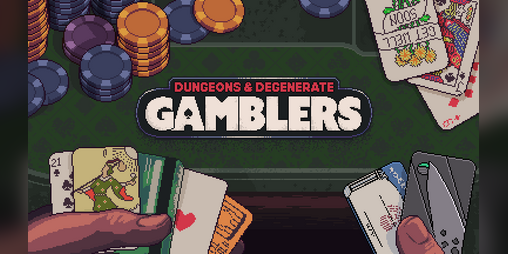



Dungeons & Degenerate Gamblers – Where Every Card Could End Your Run
Most games reward confidence.
This one punishes it.
Dungeons & Degenerate Gamblers isn’t just about playing cards—it’s about surviving your own decisions.
You draw.
You hesitate.
You push your luck… just one more time.
And then—everything falls apart.
That’s the hook.
This isn’t a game where you slowly build power and cruise to victory. It’s a game where every choice feels like standing on the edge of a cliff, wondering if the next step forward is genius… or a mistake you can’t recover from.
Not Just a Card Game—A Risk Simulator
At a glance, the mechanics feel familiar.
You draw cards.
You manage totals.
You decide whether to continue or stop.
Sounds simple—almost like blackjack.
But the moment you start playing, you realize something critical:
This game isn’t about winning hands.
It’s about surviving consequences.
Each decision echoes forward.
Each risk compounds.
And unlike a casino, you don’t just lose chips—you lose your entire run.
The First Run: Confidence Meets Reality
Your first attempt will probably go like this:
You play cautiously.
You win a few rounds.
You start feeling confident.
Then you push just a little further than you should.
And suddenly—it’s over.
No warning.
No second chances.
Just a quiet realization:
“I shouldn’t have drawn that card.”
That moment is where the game sinks its teeth in.
Because now you want to try again—not just to win, but to prove you can do better.
Roguelike Design Done Right
Like the best roguelikes, Dungeons & Degenerate Gamblers thrives on repetition—but never feels repetitive.
Each run is:
- Different in pacing
- Different in outcomes
- Different in decisions
You don’t memorize the game.
You learn how to think within it.
And that’s a key difference.
Progression isn’t just about unlocking things—it’s about sharpening your instincts.
The Psychology of Risk
What makes this game special isn’t just mechanics—it’s psychology.
It forces you to confront questions like:
- “Is this enough?”
- “Should I risk it?”
- “What’s the worst that could happen?”
And here’s the twist:
You already know the worst that could happen.
You’ve experienced it.
But that doesn’t stop you from trying again.
Because the game constantly tempts you with possibility:
“Just one more card…”
Strategy Isn’t What You Think
At first, you might think the goal is to play perfectly.
It’s not.
The real strategy is understanding:
- When to stop
- When to take risks
- When to accept small wins
And that’s harder than it sounds.
Because the game constantly rewards boldness… until it suddenly doesn’t.
A Constant Push-Pull Between Control and Chaos
One of the most compelling aspects of the game is how it balances:
- Control – You make every decision
- Chaos – You can’t predict every outcome
You feel in control… right up until you’re not.
And that tension creates an experience that feels alive.
The Atmosphere: Quiet Pressure
Unlike loud, action-heavy games, this one builds tension in silence.
There’s no chaos on the screen.
No explosions.
No fast movement.
Just decisions.
And yet, the pressure is constant.
Every card you draw feels heavier than it should.
Every moment of hesitation feels meaningful.
It’s a different kind of intensity—one that sticks with you.
Why It’s So Addictive
This game taps into one of the most powerful loops in gaming:
Short runs + high stakes + instant restart
- You lose quickly
- You restart instantly
- You try again with new knowledge
There’s no downtime.
No waiting.
Just continuous engagement.
And because each run feels like it could be the one, you keep going.
The Illusion of “Just One More Run”
You tell yourself:
“One more run.”
But the game is designed to make that impossible.
Because every run ends with:
- A mistake you want to fix
- A strategy you want to test
- A better outcome you believe is possible
And that belief keeps pulling you back in.
Beginner Tips That Actually Matter
If you want to last longer, focus on mindset—not mechanics.
Learn to Walk Away
The hardest skill in the game is knowing when enough is enough.
Respect the Risk
Confidence leads to mistakes. Stay cautious.
Don’t Chase Perfection
A safe win is better than a risky loss.
Stay Flexible
What works in one run might fail in the next.
Think Ahead
Every decision affects what comes next—not just the current moment.
Who This Game Is For
You’ll love this game if you:
- Enjoy thinking under pressure
- Like risk-reward systems
- Appreciate roguelike replayability
It’s especially satisfying for players who enjoy:
- Card games
- Strategic decision-making
- Learning through failure
Who Might Struggle With It
This game isn’t for everyone.
You might not enjoy it if you:
- Prefer fast action
- Dislike losing progress
- Want predictable outcomes
This game is built around uncertainty.
Why It Stands Out
In a genre filled with flashy mechanics and complex systems, this game stands out by focusing on something simple:
Meaningful decisions.
Every choice matters.
Every mistake counts.
And that creates a level of engagement many bigger games fail to achieve.
The Emotional Loop
What keeps players coming back isn’t just gameplay—it’s emotion.
- The tension before a risky move
- The regret after a bad decision
- The satisfaction of playing it safe
- The thrill of pushing your luck
It mirrors real-life risk in a way that feels surprisingly authentic.
Final Thoughts
Dungeons & Degenerate Gamblers isn’t about cards.
It’s about control.
It’s about restraint.
It’s about knowing when to stop—even when everything in you says to keep going.
It’s simple on the surface… but deep where it matters.
Final Verdict
This is one of those rare games that doesn’t need complexity to feel deep.
With its blend of roguelike structure, card-based decisions, and psychological tension, it delivers an experience that’s both engaging and memorable.
If you enjoy games that challenge how you think—not just how you play—this is absolutely worth your time.
Just remember:
The next card might win you everything…
Or end your run instantly.
And that’s exactly why you’ll keep playing.