





















Building an oil business in Oil Tycoon 2 begins on a much smaller scale than the word “tycoon” suggests. You start with limited production and resources, generate income from oil, and gradually reinvest what you earn into a larger and more efficient operation.
The central idea is simple: produce, earn, upgrade, automate, and expand. However, progression depends on how you spend your money. Investing everything immediately can leave you short of resources for the next opportunity, while holding onto too much cash can slow production growth.
Oil Tycoon 2 combines idle and clicker mechanics with business simulation and resource management. Instead of demanding constant fast reactions, the game focuses on improving production efficiency and deciding where your next investment can create the greatest benefit.
What is Oil Tycoon 2?
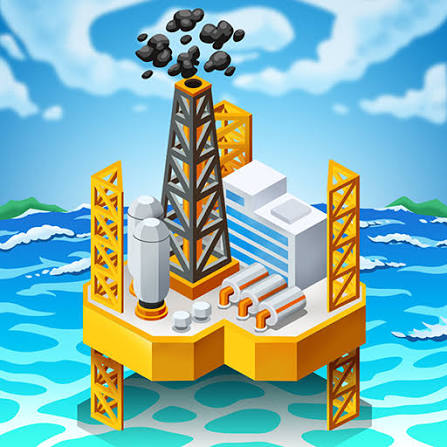
Oil Tycoon 2 is an oil business simulation and idle clicker game centered on developing a growing extraction operation. Players begin with basic production and gradually use the income generated by the business to purchase improvements, increase efficiency, and expand.
The basic progression loop is easy to understand. Extract oil to generate money, reinvest that money into the business, improve production, automate parts of the operation, and use higher profits to fund further expansion.
As the company becomes larger, investment decisions become more important. Instead of simply purchasing every available improvement, players need to consider which upgrade can provide the greatest benefit at the current stage of the game.
This creates a familiar tycoon-game cycle in which each improvement helps finance the next one.
How Oil Tycoon 2 gameplay works
At the beginning, production is relatively limited. Players interact with the available drilling operation to begin generating income. Early earnings can then be reinvested instead of simply accumulated.
This is an important principle throughout the game. Money sitting unused doesn't improve production. Spending it intelligently can increase the rate at which future money is generated.
Upgrades may improve areas such as drilling speed, production capacity, storage, or transportation. Workers and other forms of automation can reduce dependence on constant manual interaction, allowing the business to generate more value through its production systems.
Eventually, expansion opens additional opportunities. Instead of managing only the original operation, players can invest in new oil fields or locations and continue scaling the company.
The gameplay therefore becomes a repeated question: where should the next amount of money be invested?
Production is the foundation of your business
Every expansion depends on production. If the current operation isn't generating enough oil or income, larger investments will take longer to afford.
For this reason, early upgrades should generally focus on improving the core production loop. Increasing output can create a compounding effect because stronger production generates money faster, and that additional money can then fund another upgrade.
However, production speed isn't the only consideration. Increasing extraction without enough supporting capacity can create inefficiencies if other parts of the operation cannot keep pace.
Think of the business as a chain rather than a single machine. Extraction, storage, transportation, workers, and sales need to support one another.
When one part of that chain becomes significantly slower than the others, it can become the next area worth improving.
Reinvest profits instead of upgrading randomly
Oil Tycoon 2 rewards reinvestment, but that doesn't mean every available upgrade is equally useful.
Before purchasing something, compare its cost with the improvement it provides. An inexpensive upgrade that noticeably increases production may be more valuable than saving for a costly improvement that offers only a modest benefit.
This is essentially a return on investment decision. If an upgrade quickly helps generate enough additional income to recover its cost, it can accelerate future progression.
Avoid upgrading every category simply to keep their levels equal. Tycoon games often reward efficiency more than symmetry.
Look for the part of the operation that is currently limiting growth and improve that first. After fixing one bottleneck, another may become more noticeable.
This creates a more deliberate progression strategy than purchasing whatever becomes affordable first.
Workers and automation change the way you play
Active interaction can be useful during the early stages, but a growing tycoon business shouldn't depend entirely on constant clicking.
Workers and automation help shift the game from manual production toward passive income. Once parts of the operation can function with less direct input, you can concentrate resources on upgrades and expansion rather than repeating the same basic action.
This is particularly important for the idle side of Oil Tycoon 2.
The objective should be to gradually increase the amount of value your company can generate through its existing systems. A stronger automated operation means progress becomes less dependent on continuous manual play.
When choosing between upgrades, therefore, don't only ask which one increases immediate income. Consider whether an investment makes the overall business more efficient over time.
Balance active and idle income
Oil Tycoon 2 combines active interaction with idle progression, and understanding the relationship between them can improve your results.
Active play is useful when you want to accelerate production, purchase several upgrades, or reach the next expansion target. Idle systems become more valuable when the business is developed enough to generate meaningful income without constant attention.
A common mistake in clicker-style games is investing heavily in active production while neglecting automation. That may produce fast short-term results but require much more interaction later.
The opposite can also be inefficient. Waiting entirely for passive income when a few active actions could quickly finance an important upgrade may unnecessarily slow progression.
Use active play to push the company toward important milestones, then improve passive systems so the business becomes increasingly self-sustaining.
Upgrade drilling and supporting infrastructure
Production upgrades are important because they directly influence how quickly the business can generate resources. Faster or more efficient drilling can increase output and shorten the time required to afford later improvements.
But production doesn't exist in isolation.
Storage capacity can become important when the amount of oil being produced increases. Transportation improvements can support the movement of larger quantities, while other infrastructure upgrades can help the business handle its growing scale.
If you continuously improve drilling while ignoring everything around it, you may eventually create a bottleneck.
A more effective approach is to identify the slowest part of the production chain. Improve it until another part becomes the limiting factor, then shift your investment there.
This keeps upgrades connected to actual business needs rather than purchasing them randomly.
Expand when your existing operation is ready
Expansion is one of the most satisfying parts of a tycoon game because it provides visible evidence that the business is growing. However, expanding as soon as the option appears isn't necessarily the most efficient strategy.
A new oil field or region usually requires investment. If purchasing it consumes most of your available resources, the new operation may initially develop slowly because you have little money left for supporting upgrades.
Waiting too long creates the opposite problem. You may continue investing in an existing operation even when expansion could produce stronger long-term growth.
Before expanding, consider whether your current business generates enough income to support both the purchase and the improvements that follow it.
A useful expansion should create another engine for growth, not simply another area that requires resources.
Pay attention to selling and market opportunities
The supplied game concept also includes an economic side built around selling oil and managing revenue. This adds another decision beyond simply producing as much oil as possible.
When market conditions affect selling prices, the value of your oil can change depending on when or where it is sold. In that situation, maximum production doesn't automatically mean maximum profit.
This introduces a basic business principle: revenue depends on both output and value.
If the game presents different selling opportunities, compare them rather than automatically choosing the first available option. A stronger selling price can make existing production considerably more profitable without requiring another drilling upgrade.
At the same time, don't allow the pursuit of a perfect price to completely stop the cash flow needed for expansion. Balance better margins against the need to keep money moving through the business.
How to progress faster in Oil Tycoon 2
A practical early-game strategy is to concentrate on improvements that increase your income efficiently. Avoid spreading money across every upgrade category unless each investment clearly supports production.
Once income becomes more stable, begin investing in automation. The less your business depends on constant manual input, the easier it becomes to accumulate money for larger upgrades.
Watch for bottlenecks as the company grows. If extraction is fast but storage or transportation cannot keep up, increasing drilling speed again may provide less value than improving the slower system.
Save for major expansion when your current operation can generate replacement capital at a reasonable pace. Entering a new region with almost no money available for upgrades can make the expansion feel much slower than necessary.
Most importantly, think in terms of income growth rather than upgrade count. Owning more upgrades doesn't matter if those upgrades aren't helping the company produce money more efficiently.
Common mistakes new players should avoid
The first common mistake is spending money simply because an upgrade is available. Before buying, consider whether the improvement actually addresses the company's current weakness.
Another mistake is investing too heavily in only one part of production. Increasing extraction repeatedly while neglecting storage, transportation, workers, or other supporting systems can create an unbalanced operation.
Expanding too early can also slow progress. A new location may look attractive, but using nearly all available cash to unlock it can leave too little capital to develop it properly.
Players should also avoid relying exclusively on clicking. Active income can be useful, but automation and idle production become increasingly important as the business grows.
Finally, don't leave large amounts of money unused without a reason. In a tycoon game, capital usually becomes most useful when it is invested in something that generates additional future income.
Active play or idle strategy: which is better?
Neither approach is always superior. The most efficient strategy can involve using both at different stages.
During an active session, players can concentrate on generating money, buying upgrades, resolving production bottlenecks, and reaching the next important milestone.
Before leaving the game, the priority can shift toward systems that support passive production. Improving workers, automation, and other idle-income mechanics can make the operation more productive between active sessions.
When you return, accumulated resources can then finance another round of upgrades and expansion.
This creates the basic rhythm behind many idle tycoon games: active improvement leads to stronger passive income, and passive income finances the next period of active improvement.
Who should play Oil Tycoon 2?
Oil Tycoon 2 is most suitable for players who enjoy idle games, clicker games, tycoon simulations, resource management, and gradual business progression.
The basic mechanics are approachable because players don't need to learn complicated controls before beginning production. Much of the experience involves making incremental improvements and watching their effects accumulate.
Players who enjoy optimizing systems can focus more closely on investment efficiency, production bottlenecks, automation, and expansion timing.
Those looking for constant action or complex real-time strategy may find the pace slower. Oil Tycoon 2 is more focused on building momentum over time than testing reflexes.
That makes it particularly suitable for shorter sessions where players can check their operation, reinvest earnings, make a few improvements, and continue progressing.
Oil Tycoon 2 FAQ
What type of game is Oil Tycoon 2?
Oil Tycoon 2 is an idle business simulation and clicker-style tycoon game focused on developing an oil production company.
What is the main goal in Oil Tycoon 2?
The central objective is to grow a small oil operation into a larger business by producing resources, earning money, purchasing upgrades, improving automation, and expanding.
Is Oil Tycoon 2 difficult to learn?
The basic progression loop is straightforward. Players generate income and reinvest it, while more strategic decisions appear as the business becomes larger.
What should I upgrade first?
Prioritize improvements that meaningfully increase production or remove a current bottleneck. Avoid purchasing upgrades only because they are available.
Should I focus on clicking or idle income?
A combination can be useful. Active interaction can accelerate short-term progress, while automation and idle systems support longer-term growth.
When should I expand?
Expansion is generally more manageable when the existing operation generates enough income to pay for the new location while still leaving resources available for additional improvements.
Final thoughts
Oil Tycoon 2 builds its gameplay around a simple economic cycle: extract resources, generate income, reinvest profits, improve efficiency, automate production, and expand.
What makes that loop interesting isn't the act of clicking itself. It is deciding what should happen to the money afterward.
Should you improve drilling? Increase supporting capacity? Invest in workers? Save for another oil field? Strengthen passive income? Or hold resources for a larger expansion?
As the company grows, those decisions become increasingly connected. Better production generates more capital, stronger automation reduces dependence on active play, and well-timed expansion creates new opportunities for growth.
The central lesson is straightforward: don't just earn more money. Build a business that can generate the next dollar more efficiently than the last one.