







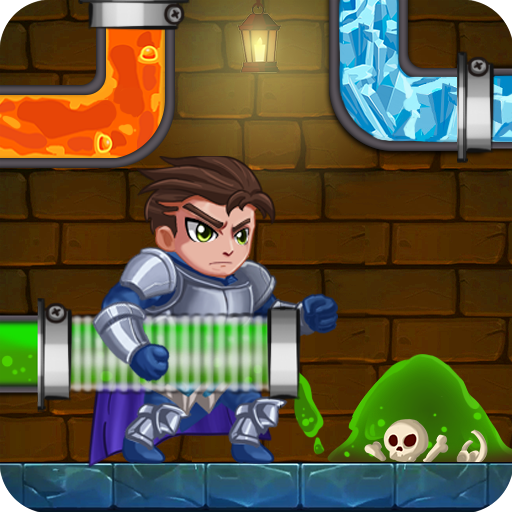


Hero Pipe takes a simple puzzle idea and builds an adventure around cause and effect. A hero needs to reach safety or collect a reward, but between him and the objective are pins, pathways, water, lava, traps, enemies and other obstacles. Your job is to determine how those elements interact before making a move.
The controls are straightforward. The thinking behind them is not always as simple. Pull the wrong pin first and water may flow into the wrong chamber. Release a hazard too early and the hero may lose the safe path forward. Make the correct sequence of moves and several parts of the puzzle can resolve one after another.
That makes Hero Pipe less about fast reactions and more about observation, sequencing and predicting consequences. The most useful question isn't simply “Which pin can I pull?” It is “What will happen to everything else if I pull this pin first?”
What is Hero Pipe?
Hero Pipe is a casual puzzle-adventure game where players manipulate pins, pathways and environmental elements to help a hero survive each level. The supplied material describes puzzles involving water, lava, traps, treasure rooms, enemies, hidden paths and timing-based mechanics.
The basic objective varies with the puzzle, but the underlying principle remains consistent: understand the environment and perform actions in an order that produces a safe outcome.
In one level, the priority may be getting water to the correct location. Another may require protecting treasure from lava. A different puzzle can place an enemy between the hero and the objective, forcing you to manipulate the environment before allowing the hero to move forward.
Each level therefore functions like a small chain reaction. The player determines when that chain should begin and in what order its individual parts should activate.
How Hero Pipe gameplay works
Most puzzles begin with the important elements already visible on screen. Before interacting with anything, identify the hero, objective, pins, liquids, enemies and hazards.
From there, try to determine how the level is connected.
A pin may be the only barrier keeping water inside a chamber. Another may prevent lava from entering the hero's route. Removing one barrier can change where liquids flow and may also alter what becomes accessible afterward.
The source describes basic actions such as pulling pins, redirecting liquids, avoiding hazards, protecting the hero and collecting treasure.
Because the controls themselves are simple, most of the challenge comes from choosing the correct action and sequence rather than performing difficult inputs.
Study the entire puzzle before pulling a pin
The easiest mistake in Hero Pipe is interacting with the first obvious pin before understanding what it controls.
Take a few seconds to inspect the whole level.
Where is the hero? Where is the treasure or exit? Which chambers contain water? Where is the lava? Are enemies blocking the route? Which pins separate these elements?
Then imagine what happens after each possible move.
If pulling one pin releases water, follow its likely path visually. Does it reach the correct area? Does another barrier stop it? Could it interact with a hazard before reaching the hero?
This short planning period can prevent many unnecessary failures.
Hero Pipe rewards players who think before acting, particularly when several pins are connected to the same chain of events.
The order of actions matters
Some puzzles aren't difficult because the correct actions are hidden. They are difficult because those actions must happen in the correct sequence.
Imagine a puzzle containing water, lava and a treasure chamber. You may eventually need to release all three areas, but doing so in the wrong order can create an unwanted result.
This is where sequencing becomes important.
Instead of asking whether a pin should be removed at all, ask when it should be removed.
A useful method is to work backward from the objective. If the hero needs to reach a particular area safely, identify what must be true immediately before that happens. Then determine what action creates that condition.
Continue backward until you reach the starting position.
This reverse-planning method can make complicated-looking puzzles easier to understand.
Understand how water and lava affect the puzzle
Liquids are among the most important environmental elements described in Hero Pipe. The source repeatedly references water flow and lava hazards as parts of the game's puzzle structure.
Before releasing either one, examine where gravity and the available pathways are likely to send it.
Water may need to reach a particular chamber or interact with another environmental element. Lava should generally be treated as a hazard whose route needs to be controlled carefully.
Never assume a liquid will remain where it starts after a pin is removed.
Trace the available path from the chamber downward. If another pin or obstacle changes that route, include it in your plan.
When both water and lava appear in the same puzzle, their relationship can become part of the solution. In those situations, don't treat each chamber as an isolated problem. Consider how changing one part of the environment affects everything connected to it.
Protect the hero before chasing treasure
Treasure creates an obvious objective, but collecting it isn't useful if the sequence puts the hero in danger.
Before opening a treasure route, check whether doing so also releases an enemy, trap or hazardous liquid.
The safest solution often involves removing danger first and collecting the reward afterward.
This introduces a useful priority:
Survival first, objective second.
If an enemy is blocking the hero's path, look for an environmental solution before exposing the hero. If lava is positioned above the route, determine how it can be redirected or neutralized before opening that section.
A successful puzzle solution should account for the entire sequence, not merely the moment when the treasure becomes accessible.
Use the environment against enemies
Enemies add another problem to certain Hero Pipe puzzles. Instead of confronting every enemy directly, examine whether the level provides another way to remove or bypass the threat.
The environment itself may be part of the solution.
Look at the enemy's position relative to liquids, traps, barriers and pathways. If changing the environment can deal with the threat before the hero reaches it, that may create a safer route.
This requires thinking about enemies as puzzle elements rather than simply obstacles.
Ask what can reach the enemy, what currently prevents that interaction, and whether activating it would create another problem elsewhere.
The best move is often the one that solves more than one problem at the same time.
Think in cause-and-effect chains
A useful way to approach harder Hero Pipe levels is to stop thinking about individual pins and start thinking about cause-and-effect chains.
For example:
Pull pin → water moves → hazard changes → route opens → hero reaches treasure.
If that chain produces the desired outcome, the sequence is probably moving in the right direction.
If instead you see:
Pull pin → lava falls → hero's route becomes dangerous, you know that action probably needs to happen later or not at all.
This mental simulation becomes more useful as puzzles contain additional elements.
You don't need to predict every tiny movement perfectly. Focus on the major consequences of each action and determine whether they move the level closer to or farther from a safe solution.
Timing can matter as much as order
Not every challenge is purely about determining which pin comes first. The source also identifies timing-based mechanics among the game's puzzle elements.
In those situations, the correct action can still fail if performed at the wrong moment.
Watch moving elements and observe how long interactions take before making the next move. If one action creates a temporary safe path, be ready to use that opportunity rather than waiting unnecessarily.
At the same time, don't rush because the level appears active.
Timing works best after you understand the intended sequence. First determine what should happen, then focus on when it should happen.
Use failed attempts as information
Failure in a puzzle game isn't always wasted progress.
If pulling a particular pin causes lava to enter the wrong chamber, you've learned something important about that pin. If releasing water first prevents another interaction later, you now know the sequence needs to change.
Instead of immediately repeating the same actions, identify the exact moment when the solution stopped working.
Was the wrong pin pulled? Was the correct pin pulled too early? Did you overlook an enemy or hidden route? Did a liquid move differently from what you expected?
Change one part of the sequence and test again.
This method is more efficient than randomly trying completely different combinations after every failure.
Visual clarity helps you read each puzzle
Hero Pipe uses a colorful and relatively simple visual style. For a puzzle game, that clarity serves an important purpose.
Players need to distinguish liquids, pins, hazards, enemies and pathways quickly. The source notes that the visual design helps make these relationships easier to read.
Pay attention to the layout rather than only the decorative elements.
The physical relationship between chambers often provides clues. A liquid positioned above another section is likely to move downward once the barrier is removed. A pin separating two areas probably controls whether those areas can interact.
In other words, the level design itself contains information about the solution.
Learning to read that information reduces the amount of random experimentation required.
A practical strategy for harder Hero Pipe levels
When a level looks complicated, use a consistent process.
First, find the final objective. Determine where the hero needs to go or what needs to be collected.
Second, identify every hazard. Mark the locations of lava, enemies, traps and anything else capable of creating failure.
Third, identify useful resources, especially water or environmental mechanisms that can change the level.
Fourth, trace the pins and pathways. Determine which barrier controls each important element.
Finally, build a sequence before touching anything. Decide what needs to happen first, second and third.
If the solution fails, don't abandon the entire plan immediately. Find the specific step that produced the wrong result and adjust from there.
This turns a visually complicated puzzle into a series of smaller logical decisions.
Common mistakes new players should avoid
The most common mistake is pulling pins immediately without inspecting the full level. Hero Pipe often rewards planning more than experimentation without a clear purpose.
Another mistake is focusing only on treasure. The route to the reward may contain a hazard that needs to be resolved first.
Players can also overlook the interaction between different areas. A pin on one side of the screen may change what happens somewhere else after a liquid begins moving.
Repeating exactly the same failed sequence is another inefficient habit. Every unsuccessful attempt should provide information that changes your next decision.
Finally, avoid assuming the most obvious route is automatically correct. Some puzzles require changing the environment before the hero can safely use the direct path.
Hero Pipe tips for solving puzzles faster
Start by observing before acting. Even a few seconds spent reading the level can save several failed attempts.
Work backward from the objective when the solution isn't obvious. Determine what condition the hero needs at the end, then identify what must happen immediately before it.
Track water and lava carefully. Think about where each liquid will travel after a barrier disappears instead of focusing only on its starting position.
Deal with dangerous elements before opening the hero's route whenever possible. A safe path is more valuable than quickly exposing the treasure.
When you fail, change one decision at a time. This makes it easier to understand which action actually caused the problem.
Most importantly, don't confuse speed with skill. Hero Pipe is primarily about making the right sequence of decisions, not finishing every puzzle as quickly as possible.
Who should play Hero Pipe?
Hero Pipe is most suitable for players who enjoy casual puzzle games, pull-the-pin mechanics, environmental puzzles and light adventure elements.
The controls are easy to understand because most interactions involve manipulating visible objects rather than learning complicated commands. The challenge comes from predicting what those interactions will cause.
Players who enjoy experimentation can test different sequences and learn from failed attempts. Those who prefer logical problem-solving can spend more time studying each layout before making the first move.
The short puzzle structure also makes the game suitable for brief play sessions, while increasingly complicated combinations provide room for more deliberate problem-solving.
Players looking for action-heavy combat may find the pace comparatively relaxed. Hero Pipe focuses primarily on observation and logic.
Hero Pipe FAQ
What type of game is Hero Pipe?
Hero Pipe is a casual puzzle-adventure game built around pins, pathways, liquids, environmental hazards, treasure and logical sequencing.
What is the main objective in Hero Pipe?
The general objective is to protect the hero, solve the environmental puzzle and reach the required reward or safe outcome.
How do Hero Pipe puzzles work?
Players manipulate elements such as pins and pathways to control how water, lava, hazards and other objects interact.
What should I do before pulling the first pin?
Study the full level. Locate the hero, objective, hazards, liquids and barriers, then predict what each available action will change.
Why does the order of pins matter?
Removing one pin can change the environment before another action occurs. A correct set of actions performed in the wrong order can therefore produce a failed solution.
What should I do if I keep failing a level?
Identify the exact action that caused the failure and change that step rather than randomly changing the entire sequence.
Final thoughts
Hero Pipe works because a very simple interaction can produce several consequences at once. Pulling one pin may release water, open a route, expose an enemy or create a new hazard somewhere else in the level.
That makes observation more important than speed.
The most reliable approach is to study the entire puzzle, identify the final objective, locate every danger, trace how liquids can move, and decide the order of actions before committing to the first move.
As puzzles become more complicated, think less about individual pins and more about the chain reaction they create.
In Hero Pipe, the solution usually isn't hidden behind complicated controls. It is already visible on the screen. The challenge is understanding what will happen before you make it happen.