









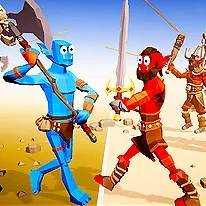




What happens when a strategy game gives you an army containing ancient warriors, elephants, sharks, and even heavily armed bears, then asks you to build the best formation possible?
You get Funny Battle Simulator 2, a battle simulation game where strategy and absurd physics work together. Instead of controlling every soldier during combat, you make the important decisions before the fighting starts. Choose your units, stay within the available budget, decide where each fighter should stand, and then watch your army attempt to defeat the opposition.
The battles can look ridiculous, but there is real strategy underneath the chaos. Unit cost, positioning, terrain, enemy composition, and army balance can all affect the outcome. A formation filled with expensive fighters isn't automatically better than a carefully constructed group of cheaper units.
That makes Funny Battle Simulator 2 easy to understand but interesting to experiment with. Every defeat gives you another opportunity to rearrange the formation and try a different solution.
What is Funny Battle Simulator 2?
Funny Battle Simulator 2 is a strategy battle simulation game in which players build an army before sending it into automated combat. According to the supplied game information, it was developed by GoGoMan and uses a limited-budget system to determine which units can be deployed.
The basic gameplay loop is straightforward. First, examine the battlefield and the opposing force. Next, spend your available currency on units and position them where you think they will be most effective. Once the battle starts, the units fight automatically.
This means you aren't expected to manually control individual soldiers during combat. Your influence comes primarily from the decisions you make beforehand.
A good formation can defeat an apparently stronger enemy, while poor positioning can cause expensive units to be eliminated before they contribute much to the battle.
How Funny Battle Simulator 2 gameplay works
Each battle begins with a preparation phase. The source describes three important restrictions during this stage: the amount of currency available, the number of units you can deploy, and the terrain of the battlefield.
Your first task is to decide how to spend the budget. You could invest heavily in a few powerful units, spread the money across a larger force of inexpensive fighters, or create a mixed army containing different unit types.
After choosing the army, positioning becomes the next major decision. Front-line fighters may need to absorb the first attack, while units that perform better from a distance can benefit from starting farther back. The exact formation should depend on what the opposing army is using.
When you're satisfied with the setup, start the battle. From this point, the units act automatically and the physics-based combat takes over.
You then watch the result and determine whether your strategy worked. If it didn't, you can use what happened during the battle to improve the next formation.
Army building is the heart of the strategy
Funny Battle Simulator 2 includes a deliberately unusual selection of fighters. The supplied material mentions cavemen, ancient warriors, elephants, wild animals, and heavily armed units such as minigun bears.
The important part isn't simply choosing whichever unit looks strongest. Every fighter has a cost, which means purchasing one expensive unit leaves less currency available for the rest of your army.
Suppose you spend most of the budget on a small number of powerful units. They may perform well individually, but they can also become vulnerable if the enemy surrounds them with a larger force.
A larger group of cheaper units creates the opposite situation. Individual fighters may be weaker, but their numbers can spread the enemy's attention across several targets.
Balanced armies can therefore be useful. Combining different unit types allows one part of the formation to compensate for weaknesses elsewhere.
Position your units before the battle
Unit placement is one of the most important mechanics because players lose direct control once combat begins. The source specifically identifies troop placement, countering enemy units, and using terrain as key factors in victory.
Avoid placing every fighter in one tight group without considering how the enemy will approach. A concentrated formation may allow multiple opposing units to attack the same area simultaneously.
Instead, think about what each fighter needs to accomplish. Durable melee units can occupy positions where they are likely to make early contact with the enemy. Units that benefit from distance should generally have enough space to operate before opponents reach them.
Spacing can also influence how the battle develops. Separating certain groups may force the enemy army to divide its attention rather than concentrating everything on one target.
The correct formation changes depending on the opposition, so don't expect one setup to solve every level.
Terrain can change your strategy
The battlefield isn't simply a visual background. According to the supplied material, different terrain types can influence unit behavior. Ice can increase movement speed, sand can slow units, and grass can help conceal troops from ranged attacks.
These effects mean that two identical armies may perform differently depending on where their units begin.
Faster movement isn't always an advantage. A unit crossing ice quickly may reach the enemy sooner, but it can also become separated from slower allies. That can turn an otherwise strong fighter into an isolated target.
Slower terrain creates a different problem. If important units take too long to reach the fight, other parts of your army may be defeated before reinforcements arrive.
Before spending the entire budget, examine the battlefield itself. Army composition and terrain should be treated as parts of the same strategy.
Understand the value of different units
Funny Battle Simulator 2 includes units with different costs, strengths, and weaknesses. The source notes that some fighters are inexpensive but weak, while others offer considerably more power at a higher price.
This creates a basic resource-management problem: quality or quantity?
There isn't always one correct answer. A powerful unit can be extremely useful if it survives long enough to make an impact, but purchasing several cheaper units may create better battlefield coverage.
Pay attention to what actually happens after each battle. If your most expensive fighter repeatedly gets surrounded immediately, the problem may not be the unit itself. Its position or the supporting formation may need to change.
Likewise, if weaker units disappear too quickly, consider whether they need support from stronger fighters instead of simply adding more of them.
The strongest army is therefore not necessarily the one with the most expensive roster. It is the one whose units work effectively together.
Automatic combat makes preparation more important
Many strategy games allow players to react continuously during combat. Funny Battle Simulator 2 works differently because the main strategic decisions happen before the fight.
Once the battle begins, you watch your setup being tested.
This makes each match resemble a small experiment. You create a hypothesis about which units and positions will work, start the simulation, observe the outcome, and then modify the setup if necessary.
A defeat can therefore provide useful information. Perhaps your ranged units were exposed too early. Maybe the enemy overwhelmed one side of the formation. Perhaps a powerful fighter entered combat before the rest of the army could support it.
Instead of immediately repeating the same setup, identify what failed and change one or two elements. This makes it easier to understand which adjustment actually improves the result.
How to build a better army
Start by studying the opposing formation before purchasing units. Look at how many enemies are present, where they are positioned, and whether the army appears concentrated or spread across the battlefield.
Next, avoid spending the entire budget on one idea unless the situation clearly supports it. A mixed army often gives you more ways to respond when the enemy uses several types of fighters.
Think about roles rather than individual power. Some units can absorb pressure at the front, while others may contribute more when protected behind them.
Numbers matter too. The supplied guide specifically notes that cheaper units shouldn't automatically be underestimated because a larger group can sometimes overwhelm a stronger opponent.
Finally, leave room for experimentation. If a balanced army fails, try changing the ratio between expensive and inexpensive units instead of rebuilding everything from scratch.
How to improve your formations
Formation design begins with spacing. Putting every unit directly beside another may look organized, but it can make the army vulnerable when several enemies converge on the same position.
Consider creating a front and back line. Fighters designed for close combat can begin nearer the enemy, while other units can remain behind them.
You can also experiment with wider formations. Spreading the army across the battlefield may change which enemies engage first and prevent one section from absorbing the entire opposing force.
Terrain should influence these decisions. If one part of the map changes movement speed or provides another tactical effect, position units based on how that terrain affects their role.
Most importantly, don't treat formation as decoration. In an automated battle simulator, where a unit begins can be almost as important as which unit you purchased.
Basic controls
The supplied game information lists controls for unit placement and camera movement. Left Click is used to place units, while Right Click combined with CTRL can remove them. WASD controls camera movement, Q and E rotate the view, and Shift can increase movement speed.
These controls are relatively straightforward because most of the challenge doesn't come from executing complicated commands during combat.
Use the camera controls before starting a battle to inspect the enemy formation and terrain. Looking at the battlefield from different angles can make gaps or weaknesses easier to identify.
Once you've examined the situation, place the army, review the formation, and begin the simulation.
Progression and new challenges
Funny Battle Simulator 2 also includes progression beyond an individual fight. According to the source, winning battles can unlock new units, additional levels, and larger encounters.
New units naturally create new strategic possibilities. A fighter that wasn't available earlier may provide another way to counter an enemy composition that previously caused problems.
More difficult levels can also require players to move beyond basic formations. Strategies that worked against early opponents may become less effective as the battlefield and opposing forces change.
Progression therefore isn't only about gaining stronger options. It also expands the number of combinations players can test.
The more units you understand, the easier it becomes to recognize which ones fit a particular battle.
Common mistakes new players should avoid
One common mistake is buying the most expensive units simply because they appear powerful. Budget efficiency matters, and one strong fighter isn't always more useful than several units working together.
Another mistake is ignoring the enemy formation. Building the same army every round prevents you from adapting to different threats.
Poor positioning can be equally costly. Even a well-balanced army may fail if important units begin in exposed positions or cannot support each other.
Players should also avoid ignoring terrain. Movement differences can alter when units enter combat and which part of an army makes contact first.
Finally, don't assume every defeat requires a completely new strategy. Sometimes moving a few units or changing one purchase can be enough to turn a failed formation into a winning one.
Who should play Funny Battle Simulator 2?
Funny Battle Simulator 2 is a good fit for players who enjoy strategy games but don't necessarily want a serious military simulation. The unusual units and physics-based battles give it a humorous presentation, while army building and positioning provide the strategic element.
It can also appeal to players who enjoy experimentation. Much of the entertainment comes from creating a formation and discovering whether the idea actually works once the simulation begins.
New strategy players can understand the basic loop quickly: examine the enemy, purchase units, arrange the army, and start the battle.
More experienced players can focus on efficiency, counters, positioning, terrain, and finding better ways to use a limited budget.
Final thoughts
Funny Battle Simulator 2 combines army building, resource management, tactical placement, terrain, and automated physics-based combat in a format that doesn't take itself too seriously.
Its central idea is simple: build an army and watch it fight. The strategy comes from everything that happens before that fight begins. Which units should you buy? How many can you afford? Where should they stand? Which enemy should you counter first? How can the terrain help your formation?
Those decisions give the chaos structure.
Sometimes the most expensive army will win. Sometimes a carefully positioned group of cheaper fighters will produce a completely different result. And sometimes the physics will turn a sensible plan into something unexpected.
That's exactly what makes each battle interesting: you create the strategy, then the simulation decides whether it actually works.