

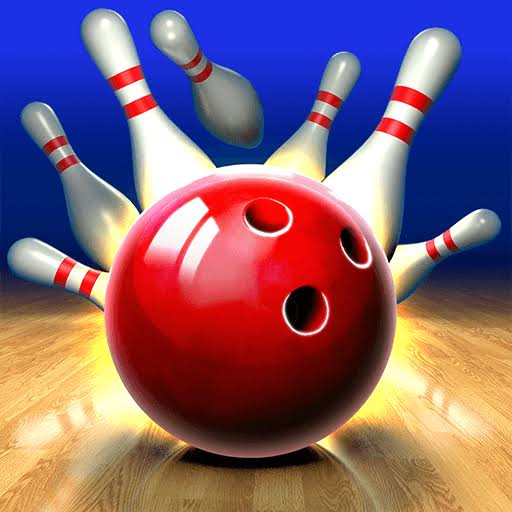

Bowling has one of the simplest objectives in sports: roll a ball down the lane and knock down as many pins as possible. 3D Bowling brings that familiar idea into a casual digital game where aiming, positioning, power, and consistent throws determine how well you score.
The basic mechanics are easy to understand, but getting reliable strikes is much harder. A small change in your starting position or release can send the ball toward a completely different part of the pins. That creates a satisfying cycle of throwing, observing the result, making an adjustment, and trying again.
Instead of overwhelming players with complicated systems, 3D Bowling focuses on the part of bowling that matters most: making a good shot and watching the pins fall.
What is 3D Bowling?
3D Bowling is a virtual bowling game designed to recreate the basic experience of playing on a bowling lane. The player positions and throws a bowling ball toward ten pins at the opposite end of the lane, with the goal of achieving the highest possible score.
The concept is immediately accessible even if you have never played a bowling video game before. You aim your shot, control the ball according to the available mechanics, release it toward the pins, and watch the result. If all ten pins fall on the first throw of a frame, you score a strike. If some remain, the next goal is to knock down the rest and complete a spare.
Although the objective remains simple, consistency becomes the real challenge. One successful strike doesn't guarantee another. Players need to understand which positions and trajectories produce reliable results and then learn how to reproduce them.
How 3D Bowling gameplay works
Every shot begins before the ball starts moving. Players need to consider the starting position, the intended path down the lane, and where the ball should make contact with the pins.
Throwing directly toward the center may seem like the obvious strategy, but bowling is more precise than simply hitting the front pin as hard as possible. The angle of contact can affect how the pins interact after impact, which means placement is often more important than raw power.
Depending on the version of 3D Bowling being played, the controls may allow players to influence direction, throwing strength, or ball movement. The exact control scheme can vary, but the central challenge remains the same: guide the ball toward an effective point of impact and knock down as many pins as possible.
This makes every attempt useful. Even a poor throw provides information about what needs to change on the next shot.
Understanding strikes, spares and scoring
A strike occurs when all ten pins are knocked down with the first ball of a frame. It is one of the most satisfying results in 3D Bowling, but it is also important because consecutive strikes can significantly improve the final score.
A spare occurs when all ten pins are cleared using both throws in a frame. If the first ball leaves several pins standing, the second throw becomes a precision challenge. Instead of repeating the original shot automatically, the player needs to adjust the aim based on the remaining pin arrangement.
This is where the game becomes more strategic than it initially appears. Chasing strikes is exciting, but converting difficult spare situations can be equally important for building a strong overall score.
Players who improve at both first-ball accuracy and spare conversion will generally produce more consistent games than those who rely only on occasional strikes.
Why precision matters in 3D Bowling
The difference between an excellent throw and a frustrating near miss can be surprisingly small. A slight change in direction may determine whether the ball reaches an effective area or leaves one or more pins standing.
This precision gives 3D Bowling much of its replay value. The player always has something specific to improve. After missing to one side, you can adjust the next throw. After finding a successful trajectory, the challenge becomes reproducing it consistently.
It is also useful to watch how the pins react after impact. Don't focus exclusively on whether a shot produced a strike. Look at where the ball entered the group of pins and which pins remained standing. Those details can help identify whether your aim needs a small adjustment.
Over time, players can develop a more reliable approach rather than treating each throw as an isolated attempt.
Tips for getting more strikes
Start by prioritizing accuracy over maximum power. A controlled shot that reaches the intended part of the pins is generally more useful than an aggressive throw that misses the target. Once you find a trajectory that works, make small adjustments instead of completely changing your approach after every attempt.
Try to keep your release consistent as well. If you constantly change position, direction, and power at the same time, it becomes difficult to understand why one shot worked and another failed. Changing one variable at a time makes it easier to learn from each throw.
When you miss a strike, pay attention to which pins remain standing. If the ball consistently misses on the same side, adjust the starting position or direction slightly on the next attempt. Small corrections are often more effective than dramatic changes.
For spares, forget about recreating the perfect strike shot and focus specifically on the remaining pins. The best line for a spare may be completely different from the line used on the first throw.
Why the 3D perspective works well for bowling
Bowling depends heavily on direction, distance, and trajectory, making a 3D perspective particularly suitable for the sport. Seeing the lane extend toward the pins gives players a clearer sense of where the ball is traveling and builds anticipation as it approaches the target.
The visual payoff happens at impact. Watching the ball enter the pins and seeing them react provides immediate feedback about the quality of the shot. A clean strike is satisfying not only because of the score, but also because the result is visible immediately.
Clear visuals are more important here than unnecessary graphical complexity. Players need to see the lane, ball, and pins well enough to judge their shots and make adjustments.
That simplicity helps keep attention on the actual bowling rather than distracting players with unrelated mechanics.
Simple gameplay with room for improvement
One of the advantages of 3D Bowling is that a new player can understand the objective almost immediately. There is no need to memorize a large number of commands before making the first throw.
However, easy-to-understand gameplay doesn't mean there is nothing to improve. Beginners may initially concentrate on hitting the pins at all, while experienced players can focus on consistency, consecutive strikes, spare conversions, and higher total scores.
That creates a natural progression without requiring a complicated upgrade system. Improvement comes largely from the player becoming better at reading shots and controlling the ball.
The result is a game that can work for a quick casual session while still giving score-focused players a reason to keep practicing.
Why 3D Bowling is easy to replay
Bowling has a naturally effective replay loop because every game produces a measurable result. A player can immediately compare the latest score with previous attempts and identify obvious opportunities for improvement.
Near misses are particularly effective at encouraging another round. Missing a strike by one pin creates the feeling that only a tiny adjustment is needed. A strong game can have the same effect because players naturally want to see whether they can perform even better next time.
Individual throws are also resolved quickly. There is little waiting between making a decision and seeing the result, so the feedback loop remains fast and satisfying.
This makes 3D Bowling suitable for players who enjoy sports games but don't necessarily want complex team management, long matches, or extensive tutorials.
Who should play 3D Bowling?
3D Bowling is a good fit for players who enjoy bowling, casual sports games, precision-based challenges, score chasing, and straightforward gameplay. It is particularly accessible because understanding the objective doesn't require extensive knowledge of sports games.
Players who enjoy gradual skill improvement may also find plenty to work toward. Getting one strike can happen relatively quickly, but learning to reproduce good shots consistently creates a much longer challenge.
The experience is less suitable for players looking for a deep sports simulation with extensive management systems or a story-driven campaign. The main attraction is much simpler: step onto the virtual lane, make your throw, and try to improve the result.
Final thoughts
3D Bowling demonstrates why bowling translates so naturally into a casual game. Ten pins, one ball, and a clear objective are enough to create an experience that is easy to understand but difficult to perform perfectly.
The game rewards accuracy, consistency, observation, and small adjustments. Strikes provide the biggest immediate satisfaction, but learning how to convert spares and recover from imperfect first throws is just as important for improving your score.
For players who want a straightforward sports game without unnecessary complexity, 3D Bowling offers exactly what its name promises: a virtual bowling experience centered on the pursuit of cleaner throws, more strikes, and better scores.
The rules are simple. Throwing the perfect game is not.